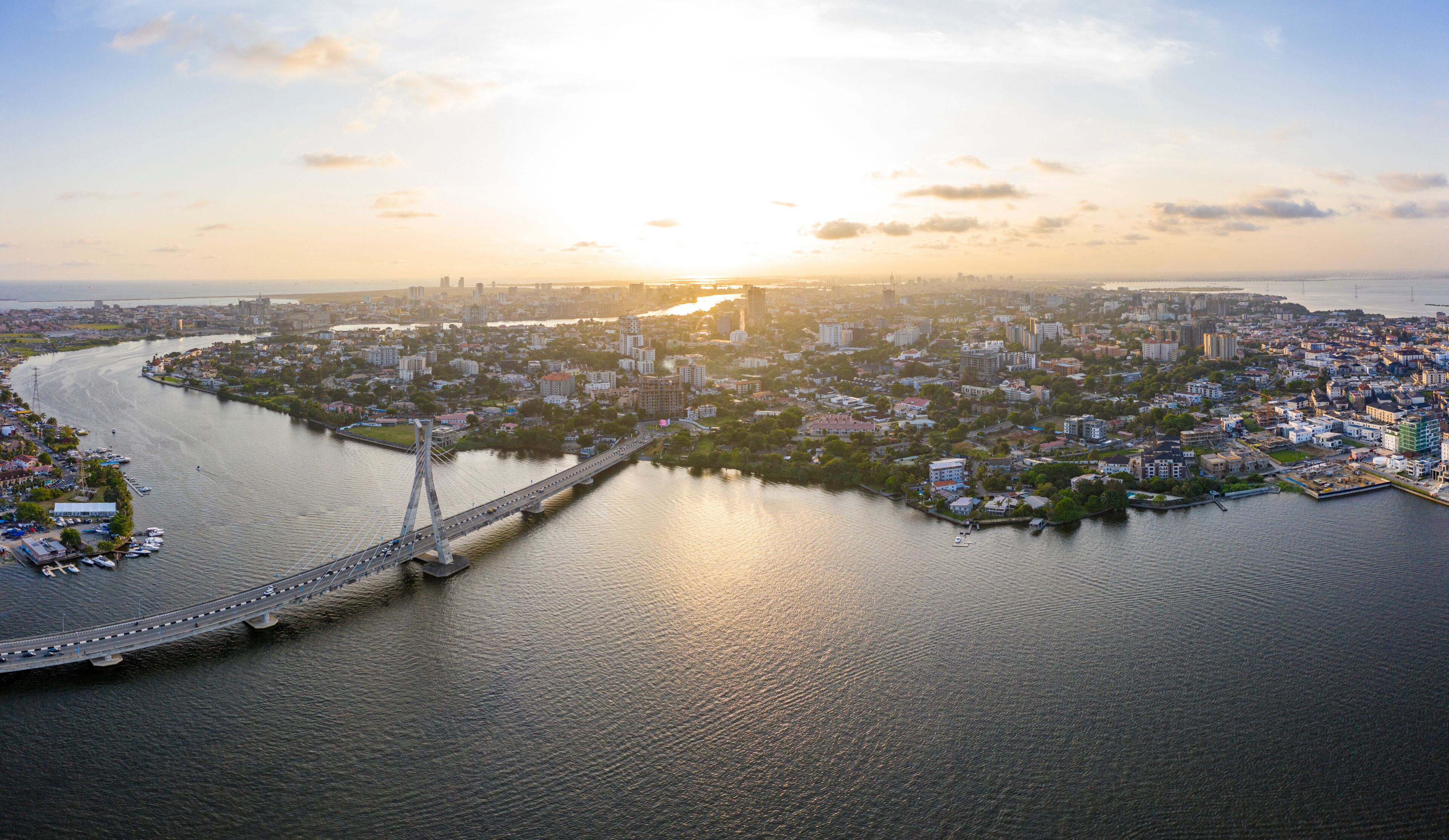
Lekki Is Becoming Nigeria’s Real Estate Technology Test Lab
Lekki’s real estate market is changing fast. Explore how technology, data and digital property platforms are reshaping how Nigerians find homes and invest.
If you spend any real amount of time around Lekki today, you can see that the area is changing quickly.
New estates keep appearing. Roads are being expanded. Businesses are moving in. More people are looking for homes around Lekki Phase 1, Ajah, Sangotedo and further down the Lekki-Epe corridor.
But there is another change happening that is easier to miss.
The way people search for property is changing too.
For a long time, finding a home in Lagos meant asking around. You might call an agent, check a WhatsApp group, scroll through Instagram, ask a friend, drive around an area or simply rely on someone who knows someone.
Today, a lot of that search starts online.
You Google a location. You check property websites. You watch videos of apartments. You message someone on WhatsApp. You compare prices before deciding whether a property is even worth visiting.
And that is where Lekki gets interesting.
The area is becoming more than one of Lagos’ biggest property markets. It is becoming a place where we can see what the future of Nigerian real estate might look like when property and technology start working together.
Lekki’s property market is getting harder to ignore
There is a reason so much attention is being paid to Lekki.
According to a 2026 residential market report cited by BusinessDay, Lekki Phase 1 recorded the strongest rental growth among the locations covered by the report between 2022 and 2026.
The report estimated the average annual rent for a two-bedroom apartment in Lekki Phase 1 at around ₦10 million, alongside a five-year compound annual growth rate of 35.9%.
Of course, that doesn’t mean every house in Lekki costs ₦10 million a year, or that every property has experienced the same level of growth.
Anyone who has searched for a home in Lagos knows how different prices can be from one street to the next.
The estate, road, size of the property, condition, title documents, facilities, security and accessibility can all make a major difference.
But the bigger point is clear: there is a lot happening in Lekki’s property market.
And when there is a lot of property activity, there is usually a lot of information to manage.
A person searching for a home may have very simple questions:
Is this property still available?
Is the advertised price current?
Who is actually offering the property?
What documentation does it have?
When was the listing last updated?
Are there similar properties nearby?
These sound like real estate questions.
They are also technology questions.
Nigeria doesn’t need another website full of property photos
Nigeria already has property websites.
The bigger opportunity is what happens behind the listing.
A property listing shouldn’t just be a picture, a price and a phone number.
Ideally, it should give a person enough structured information to understand what they are looking at.
Where is the property?
What type of property is it?
How many bedrooms does it have?
Is it for sale, rent or shortlet?
What amenities are available?
What documentation has been provided?
When was the property last verified?
Who listed it?
Is there a video?
Can the buyer or tenant easily make an enquiry?
These details may seem small individually, but together they can make searching for property much easier.
Imagine searching for a three-bedroom apartment in Lekki and being able to narrow your options by budget, exact area, property type, availability, amenities and other requirements.
That is when a property platform becomes more than an online noticeboard.
It becomes a search and information system for real estate.
Lekki is becoming more than a residential market
There is another reason Lekki deserves attention.
The area isn’t developing around houses alone.
The wider Lekki corridor is becoming increasingly connected to commercial, industrial and logistics activity.
The Lagos Free Zone, for example, spans approximately 16,500 hectares and is connected to the Lekki Deep Seaport. BusinessDay has reported growing investment and business activity around the area.
And when businesses move into an area, the effect doesn’t stop at the office or factory gate.
People need somewhere to live.
Companies need offices.
Businesses need warehouses.
Retailers need shops.
Developers need land.
Employees need transportation.
Investors need information.
That creates an entire ecosystem around real estate.
It also creates more reasons for property information to become easier to find and understand.
The developer now has something previous generations didn’t have
Data.
A developer today can learn a lot from how people behave online.
What areas are people searching for?
Which property types are getting the most attention?
What prices are people looking at?
Which listings receive enquiries?
Which locations have plenty of supply?
Where does demand appear to be increasing?
Even the amenities people search for can tell a story.
That information can potentially help developers make better-informed decisions about what they build and where they build it.
BusinessDay has also highlighted the growing role of PropTech and consumer intelligence in Nigerian real estate.
The interesting part is that this isn’t just about artificial intelligence or flashy technology.
Sometimes, it is simply about having better information and actually using it.
The Nigerian property buyer is becoming a digital consumer
Think about how someone searches for a home today.
They might start on Google.
Then they might see an Instagram video.
They could find another property on a listing platform.
They might send a WhatsApp message.
They may compare prices with properties in another neighbourhood.
They may watch a video tour before deciding whether to arrange an inspection.
For Nigerians living abroad, this becomes even more important.
Someone living in London, Toronto, Atlanta or Abuja may want to investigate properties in Lagos before getting on a plane.
Technology cannot replace seeing a property physically.
It cannot replace a lawyer checking documents.
And it certainly cannot eliminate the need for proper due diligence.
But it can help someone get much further into the decision-making process before they ever step through the front door.
Verification will become increasingly important
There is a flip side to putting more property information online.
More information doesn’t necessarily mean better information.
A beautiful photograph doesn’t prove ownership.
A social media post doesn’t prove that a property has the documentation being claimed.
And a listing that says “available” doesn’t necessarily mean the property is still available today.
This is one of the areas where Nigerian PropTech has a lot of room to develop.
The future shouldn’t simply be about getting more properties online.
It should also be about improving the quality of the information surrounding those properties.
There should be a clear difference between information supplied by a property advertiser, information that has been verified by a platform, and matters that still require independent professional verification.
That distinction is important.
Good technology should make property easier to understand — not give people a false sense of security.
What happens in Lekki could spread across Nigeria
Lekki may be one of the most interesting places to watch, but the problem it represents isn’t limited to Lekki.
The same challenges exist in Ikoyi, Victoria Island, Yaba, Ikeja and Surulere.
They exist in Abuja.
They exist in Port Harcourt.
They exist in Ibadan.
And eventually, many of the same ideas will apply across other African cities.
That makes the opportunity much bigger than simply creating another way to find a house in Lekki.
The larger opportunity is building better digital infrastructure around how property is discovered, marketed, compared, managed and eventually transacted.
The next generation of Nigerian real estate will be searchable
Perhaps the biggest change is also the simplest.
Property is becoming searchable.
You don’t necessarily have to know an agent personally before discovering a property.
You don’t necessarily have to belong to a particular WhatsApp group.
You don’t necessarily have to drive around a neighbourhood hoping to see a “To Let” sign.
Increasingly, you can start from your phone.
That doesn’t mean the human side of real estate is disappearing.
Realtors still matter.
Developers still matter.
Lawyers still matter.
Surveyors still matter.
Property managers still matter.
But technology can take some of the friction out of finding information and connecting the right people.
And that is why Lekki is worth watching.
The houses are physical.
The land is physical.
The roads are physical.
The city is physical.
But the way people discover and understand all of those things is becoming digital.
That may ultimately be the bigger story happening in Lekki.
Not simply that more houses are being built.
But that an entirely new digital layer is beginning to form around Nigerian real estate.
And companies building within that layer will have an important role to play in what comes next.
Temivilla is building toward that future making property discovery in Nigeria more structured, searchable and connected.
End Of Intelligence Report